.png)
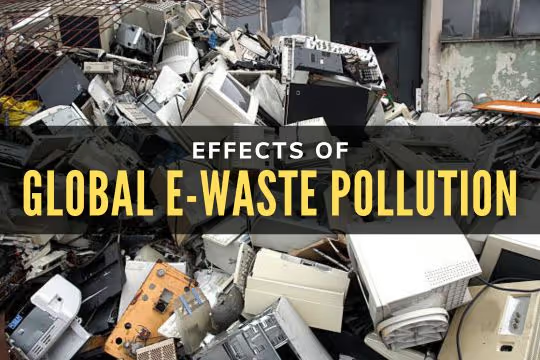

Have you ever wondered where your old phone, cracked tablet, or dead power bank ends up after you replace it? Around the world, discarded electronics are piling up faster than recycling systems can handle, and the effects reach far beyond landfills. The global e-waste dumping effects on environment include toxic smoke from open burning, polluted waterways, and contaminated soil where food is grown. For travelers, this issue matters because tourism and constant device use can add to the problem, but smart choices can also help reduce it.
What Counts as E-Waste, and Why It’s Growing
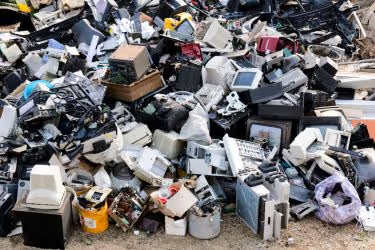
E-waste includes any discarded item with a plug, battery, or circuit board, from laptops and chargers to hair dryers and smart watches. The world generated about 62 million tonnes of e-waste in 2022, and documented formal recycling was only 22.3%. Forecasts show e-waste could rise to 82 million tonnes by 2030, while recycling rates may fall if collection doesn’t keep up.
Why “Dumping” Happens
Electronics contain valuable materials like copper and gold, but also hazardous ones like lead, mercury, and brominated flame retardants. Under the Basel Convention, e-waste can be classified as hazardous when these toxic components are present, and cross-border movement is regulated to reduce harm. Even so, broken or non-repairable electronics can still end up in places without safe processing, especially through informal channels.
Environmental Impact of Global E-Waste Dumping
When e-waste is dumped or processed informally, the environmental damage is often immediate and visible.
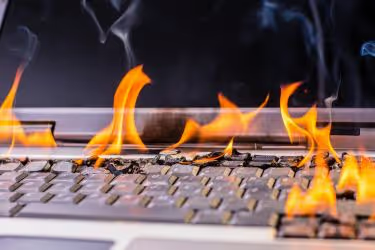
Air Pollution: Open Burning and Toxic Fumes
In informal recycling areas, plastics are sometimes burned to recover metal wires. That smoke can contain persistent pollutants (like dioxins) plus heavy metals that spread through neighborhoods. Reporting on Ghana’s well-known e-waste hub in Accra describes widespread air contamination and the daily exposure faced by workers who burn electronics to extract metals.
Soil and Water Contamination: Heavy Metals That Don’t “Go Away”
Toxic metals can settle into soil and wash into drains, rivers, and wetlands. Studies in e-waste processing communities have documented metal pollution in local environments, including soils and dust, showing how contamination can extend into residential and school areas. This matters because pollutants can move from soil and water into crops, fish, and livestock, creating long-term risks for ecosystems and communities.
Human Health as an Environmental Signal
Environmental harm often first shows up in health data. Research on informal e-waste processing sites has found elevated exposure to metals, such as lead, among people working in e-waste recycling and disposal areas. When health is affected, it usually means that air, soil, and water are already compromised.
What Travelers Can Do While Staying at a Hotel
You don’t need to be an expert to reduce your footprint. Here are practical, travel-friendly actions that help address the global e-waste dumping effects on environment:
Pack and Use Electronics Smarter
- Bring a universal adapter and a durable charger, rather than buying cheap replacements on the road.
- Use rechargeable batteries and refillable power banks rather than disposable ones.
- Protect devices with a case to avoid “vacation accidents” that end up in the trash.
Dispose Responsibly in Your Destination
- Ask the front desk or concierge if the hotel partners with a certified recycler or a local drop-off site.
- Look for official collection points (often at malls, electronics stores, or city recycling centers).
- If you’re flying, don’t leave broken electronics behind “for someone else” to handle.
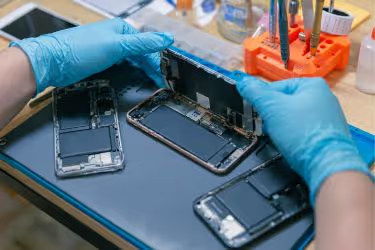
Support Repair and Reuse
If a device fails mid-trip, try to repair it before replacement. Extending a gadget’s life is one of the simplest ways to cut the global e-waste dumping effects on environment.
Better Travel, Less Toxic Waste
Choosing repair, certified recycling, and smarter purchasing helps reduce pollution and protects the places you love to visit. If you want to understand what makes e-waste so dangerous, read about toxic substances in electronics and use that knowledge to travel more responsibly, one device decision at a time.