.png)
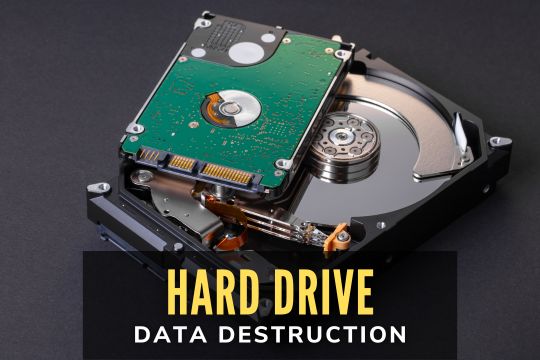

What is the safest way to get rid of an old hard drive that contains sensitive data? Simply deleting files or formatting the drive may not remove everything. For businesses, government offices, and IT teams, proper hard drive destruction helps keep private information from falling into the wrong hands. Comparing degaussing vs shredding hard drives for data security can help you decide which method works best for your drive type, security needs, and disposal requirements.
Degaussing vs. Shredding Hard Drives for Data Security
Degaussing and shredding are two common methods for destroying data stored on hard drives. Both can protect sensitive information, but they work in very different ways.
What Is Hard Drive Degaussing?
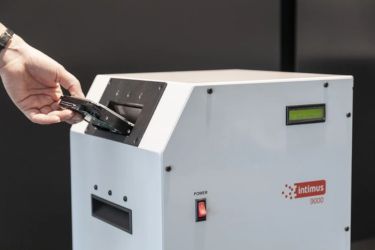
Degaussing uses a strong magnetic field to erase data stored on magnetic media. The magnetic field changes how information is stored on the drive, rendering the data unreadable.
Degaussing works with traditional hard disk drives (HDDs) and magnetic tapes. However, it does not work on solid-state drives (SSDs), USB flash drives, or other flash-based storage because these devices do not store data magnetically.
After a hard drive is properly degaussed, it usually cannot be used again.
What Is Hard Drive Shredding?
Hard drive shredding physically destroys the storage device. A special shredder breaks the drive into small pieces, damaging the parts that hold and process the data.
Shredding can be used for different types of storage devices, including:
- Hard disk drives (HDDs)
- Solid-state drives (SSDs)
- USB flash drives
- Other electronic storage media
Because the device itself is destroyed, shredding is a straightforward option for organizations that need physical proof that old drives are no longer usable.
Degaussing or Shredding: Which Is Better?
When considering degaussing vs. shredding hard drives for data security, the better choice depends on the type of storage device you have and the sensitivity of the information.
When to Choose Degaussing
Degaussing may be a good choice when you have magnetic hard drives or tapes and need to erase large amounts of stored data. The equipment used must be strong enough for the specific type of media.
Keep in mind that degaussing cannot erase SSDs or flash storage.
When to Choose Shredding
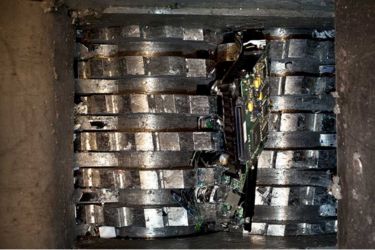
Shredding may be the better choice when you want the storage device physically destroyed. It can also handle more types of media, which can make the process easier for IT departments disposing of a mix of HDDs, SSDs, and other devices.
For highly sensitive information, some organizations choose to degauss magnetic drives first, then shred them.
Don’t Forget Security and Documentation
Businesses and government agencies in Los Angeles and Orange County should also think about what happens to hard drives before they are destroyed.
Old drives should be collected, stored, transported, and tracked carefully. A clear chain of custody helps reduce the chance of a device being lost or accessed by someone who should not have it.
Organizations may also need records of the destruction process, such as asset lists or certificates of destruction, for company policies, audits, or compliance needs.
How to Choose the Right Method
Start by identifying the type of drives you need to destroy. Then consider how sensitive the data is, your company’s security policies, and any applicable rules.
Choose Secure Data Destruction. When comparing degaussing vs shredding hard drives for data security, the right method depends on your storage devices and security requirements. If physical destruction is the best fit for your organization, learn more about industrial hard disk shredders and how they are used for secure hard drive disposal.